

AI in Health & Fitness 2026
How to Leverage AI in Health & Fitness in 2026: Smarter, Fitter, and Healthier
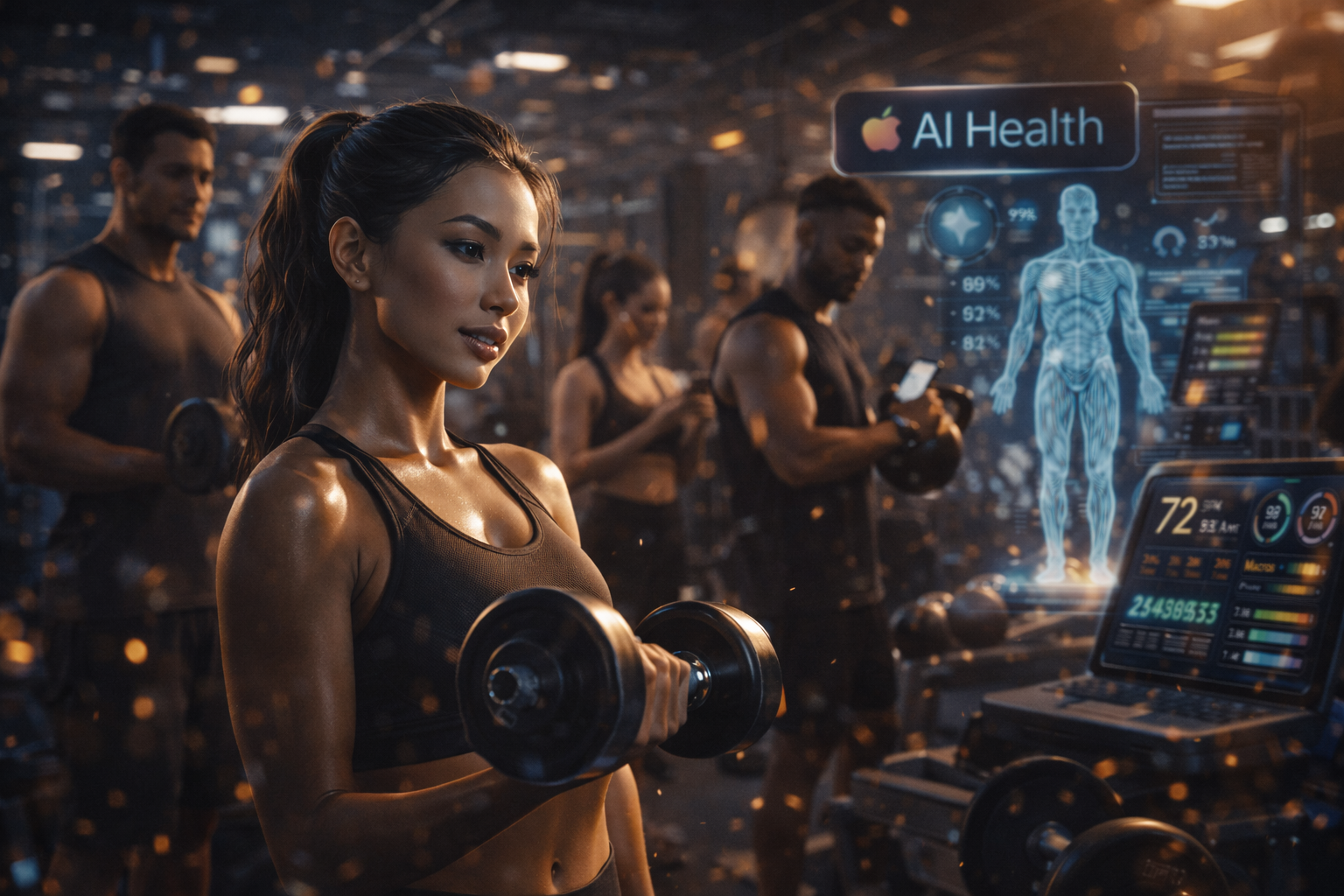
Feel like you’re juggling too much to stay healthy? Between work, errands, and trying to squeeze in a workout, keeping fit can feel like spinning plates. But here’s the good news—AI isn’t just for tech wizards and sci-fi anymore. It’s officially your new wellness wingman.
The AI Advantage: Like Having a Personal Coach, Chef, and Doctor in Your Pocket
Imagine your health journey as a road trip. In the past, you might’ve been driving blind, guessing when to eat, how hard to train, or whether your sleep was “good enough.” But in 2026, AI is your GPS, your co-pilot, and even your pit crew—navigating, adjusting, and optimizing every mile of your journey.
In this post, you’ll discover how AI is reshaping health and fitness—and how you can tap into this revolution to get leaner, stronger, and healthier without the guesswork.
1. Meet Your AI Personal Trainer: Workouts That Adapt to YOU
Tired of cookie-cutter workouts that don’t fit your schedule or body? AI-powered fitness apps like Freeletics, Fitbod, and Apple Fitness+ now use real-time biometric data to create hyper-personalized routines.
These apps assess your current fitness level, track fatigue, adjust exercises based on performance, and even spot form issues via your device’s camera. It’s like having a personal trainer who never cancels on you.
🧠 Smart tip: Use wearables (like WHOOP or Apple Watch Ultra 3) to feed live data to your fitness app for adaptive training.
📊 Stat: According to a 2025 report by McKinsey, AI-powered training improved user adherence to fitness routines by 48%.
💬 “The AI doesn’t just tell me what to do—it knows what I can do. That’s a game-changer,” says fitness influencer and coach, Joe Holder.
2. AI-Driven Nutrition: Your Personalized Meal Planner
Meal prepping feel like mental gymnastics? Let AI take the wheel. Apps like NutriSense, ZOE, and MyFitnessPal (with GPT-4 plugins) now tailor your meals based on blood glucose response, allergies, preferences, and fitness goals.
Whether you’re keto-curious, vegan-for-a-reason, or just trying to lose weight, AI designs meal plans that make sense for your body—not a generic template.
🧠 Smart tip: Connect a continuous glucose monitor (CGM) to your nutrition app for next-level personalization.
📊 Stat: ZOE’s AI algorithm reportedly increased weight loss consistency by 34% across its test group in 2025.
💬 “Nutrition isn’t one-size-fits-all—and AI finally makes that possible,” says Dr. Tim Spector, co-founder of ZOE.
3. Recovery Reimagined: Sleep & Stress Optimization with AI
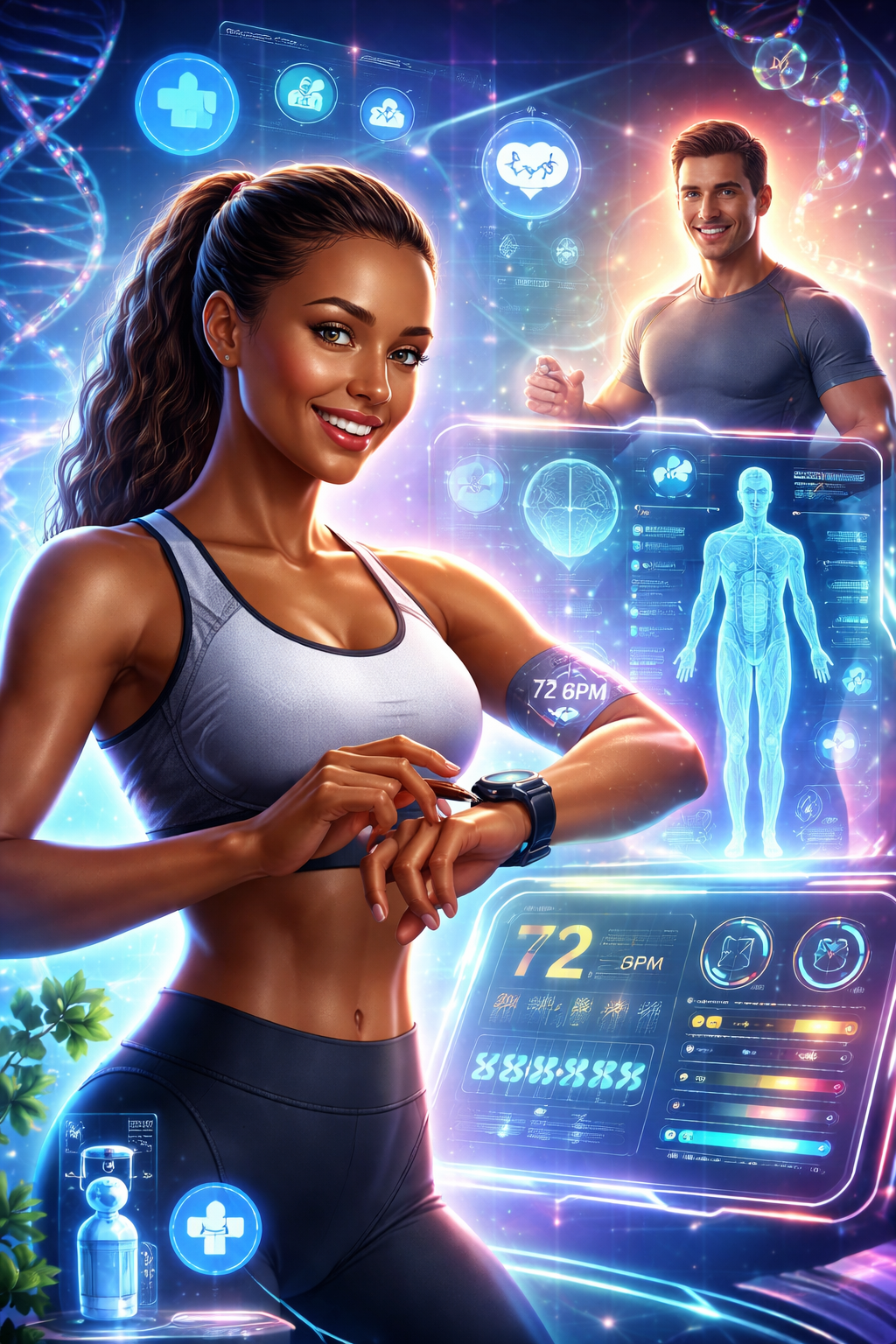
Still dragging after 8 hours of sleep? You might be resting, but are you recovering? Enter AI-guided recovery tools like Oura Ring Gen4, CalmAI, and Revery.
These platforms analyze your heart rate variability (HRV), sleep cycles, and cortisol trends to personalize your wind-down routine, suggest optimal sleep times, and even guide mindfulness exercises in real time.
🧠 Smart tip: Use AI-powered apps that sync across wearables to build a seamless stress-recovery-sleep loop.
📊 Stat: A Stanford Health AI Lab study found a 27% improvement in deep sleep duration among users using AI-based recovery trackers.
💬 “Recovery is the new fitness frontier. AI makes it measurable—and manageable,” says sleep scientist Matthew Walker.
4. Preventive Health Monitoring: AI That Spots Trouble Before It Starts
What if your smartwatch could detect illness before you feel sick? In 2026, that’s a reality. Devices like Fitbit Sense 3, Garmin Venu 3, and Apple’s Health Pro app now use AI to track subtle biometrics and flag anomalies.
These systems monitor oxygen saturation, skin temp, HRV, and respiratory rate to detect early signs of illness, overtraining, or hormonal imbalances—giving you time to adjust before symptoms even show.
🧠 Smart tip: Set up alerts for irregular metrics to catch issues early.
📊 Stat: According to the Mayo Clinic’s 2026 AI & Wellness review, early illness detection via wearables reduced medical intervention costs by 39%.
💬 “Prevention is cheaper than cure. AI brings that to your wrist,” says Dr. Eric Topol, digital health pioneer.
5. Virtual Wellness Coaches: 24/7 Support That Gets You
Need a pep talk or accountability partner at 2 a.m.? You got it. AI-powered wellness bots like Replika Health, Woebot, and Wysa offer always-on motivation, emotional support, and behavioral coaching.
These bots learn your habits, detect mood patterns, and nudge you toward healthier choices with empathy and insights.
🧠 Smart tip: Use journaling features to track emotional triggers and align mental health with physical goals.
📊 Stat: Users who engaged with AI mental health support at least 3x/week saw a 21% improvement in motivation and goal achievement (PsychTech Review, 2025).
💬 “Mental fitness is the engine behind physical progress. AI helps keep that engine running,” says performance psychologist Dr. Michael Gervais.
6. AI at the Gym: Smart Equipment That Learns You
Gyms are getting brains. Brands like Tonal, Tempo, and Peloton+ now integrate machine learning to adjust resistance, spot fatigue, and correct form instantly.
Whether you’re lifting, cycling, or boxing, these tools adapt in the moment, learning from your technique and performance to keep you challenged—but not overworked.
🧠 Smart tip: Look for gym equipment that offers real-time feedback, not just passive tracking.
📊 Stat: Users of smart strength platforms like Tonal reported 43% faster gains in muscle endurance over 12 weeks (FitnessAI Journal, 2025).
💬 “It's not just about lifting heavier—it’s about lifting smarter,” says Tonal ambassador Serena Williams.
The Takeaway: Let AI Be Your Secret Weapon
Health and fitness in 2026 isn't about grinding harder—it's about training smarter. AI has turned wellness into a personalized, data-driven experience that puts you in control.
By integrating AI into your routine, you're not just staying on track—you’re creating a blueprint for long-term vitality.
💡 Remember: The tools are smarter, but you’re still the driver. Let AI be your sidekick, not your steering wheel.
“The future of fitness isn’t in more effort—it’s in more intelligence.”
Ready to train with brains and brawn?
